Every platform quietly switched from "who you follow" to "what you like"
TikTok, YouTube and Instagram all moved to interest-based feeds. Each platform said so in writing. It is the biggest structural change in social media in a decade.
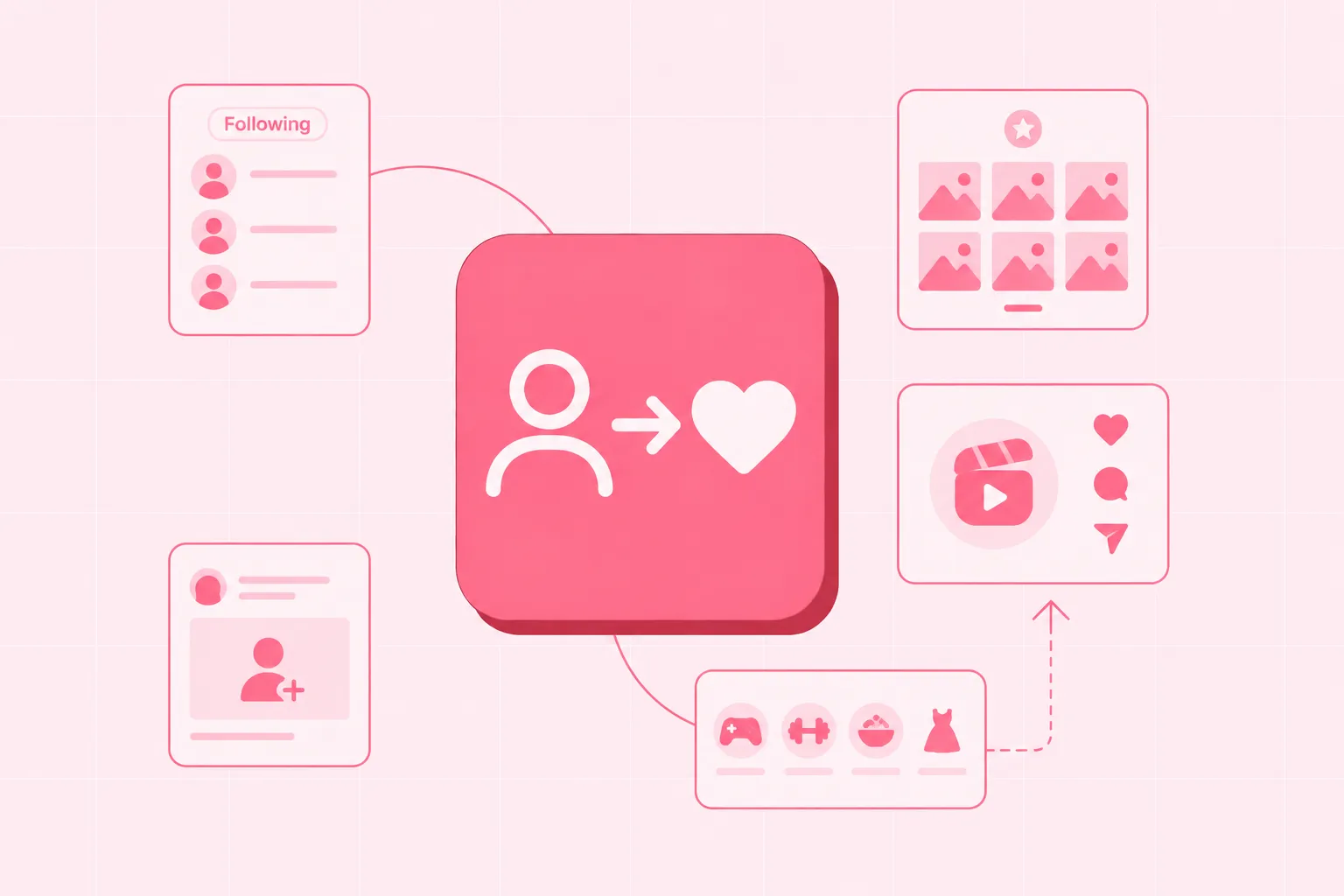
You follow 300 accounts. Instagram shows you posts from five of them. The rest of your feed is filled with reels from strangers. You open YouTube. The homepage is full of videos from channels you never subscribed to. TikTok does not even pretend. Its first screen is called For You, not Following.
This is not three accidents. It is one change, made three times, by three companies. Each one moved the same direction. Each one said so. And almost no one noticed that the whole industry had rewritten the deal.
The old model was simple. You followed an account. That account's posts showed up in your feed. A feed was a list of things from people you chose to hear from. That model is over. All three platforms now show you content based on what they think you will like. Not based on who you decided to follow. Delivery became a prediction. And it is a prediction nobody has learned to make reliably, inside these companies or outside them.
This post documents when each platform said it. What they published about why. And what that shift means for anyone trying to reach an audience. Every source below is linked, quoted and dated.
TikTok built it this way from the start
TikTok launched internationally in September 2017. Its first screen was not a feed of people you follow. It was the For You page. A stream of videos picked by an algorithm. One that had no idea who you followed because you had not followed anyone yet.
The company published how that system works on 18 June 2020. The post is called How TikTok recommends videos #ForYou. It names the factors the system weighs. User interactions come first. Likes, shares, comments, watch time. Video information comes second. Captions, sounds, hashtags. Device settings come last.
Then it states the part that breaks the old model:
neither follower count nor whether the account has had previous high-performing videos are direct factors in the recommendation system. — TikTok Newsroom, How TikTok recommends videos #ForYou, 18 June 2020
Follower count does not matter. A brand new account gets the same shot at the For You feed. So does one with a million followers. The system scores videos. Not accounts.
TikTok does have a Following feed. It sits in a second tab. But the app opens to For You. That is the feed the company built first. That is where it sends new users. And that is the feed it designed to ignore who you follow.
The company merged with Musical.ly in August 2018. Musical.ly had about 100 million users at the time. It used a follow-based feed. TikTok had 500 million and an algorithm. The algorithm won. ByteDance shut down the Musical.ly brand and moved everyone to TikTok. One reason was the For You page. A follow-based feed could not compete with algorithmic distribution.
YouTube made recommendations bigger than subscriptions
YouTube launched a subscriptions feature in 2005. For years that was how you followed channels. You subscribed. Their videos showed up in your subscriptions feed. That feed still exists. But it is not where YouTube sends you anymore.
The homepage is where the app opens. And the homepage is not subscriptions. It is recommendations. YouTube published how its recommendation system works on its own blog. The post has no date stamp. It was last updated in 2021 based on archive records. It describes changes going back to 2008.
The key sentence is this one:
Recommendations drive a significant amount of the overall viewership on YouTube, even more than channel subscriptions or search. — YouTube Official Blog, On YouTube's recommendation system
More than subscriptions. More than search. Recommendations are now the biggest driver of views on the platform. That is YouTube's own statement.
The system works by comparing your viewing habits with other users. It uses over 80 billion signals. Clicks, watch time, survey responses, shares, likes. Then it ranks videos by predicted value. Not by who made them. Not by whether you subscribed to their channel.
YouTube shifted to this model in stages. In 2008 the system ranked videos by popularity. One big trending page for everyone. By 2012 it added watch time as a signal. YouTube published that change on 10 August 2012. The old system rewarded clicks. The new one rewarded videos that kept people watching.
That is when the platform started valuing engagement over relationships. A video from a channel you never heard of beats a video from one you subscribed to. That happens if the algorithm thinks you will watch it longer.
YouTube still has a subscriptions tab. You can go there and see a feed of recent uploads from channels you follow. But you have to choose that. The app does not open there. It opens to recommendations. And those recommendations do not care whether you subscribed.
Instagram added recommendations to a feed that used to be only follows
Instagram launched in 2010 as a chronological feed. You followed accounts. Their posts appeared in time order. Newest first. That lasted six years.
On 15 March 2016 Instagram announced it would rank the feed. The company said users were missing 70% of their posts. Too many people posting. Not enough time to see it all. So Instagram built a ranking system. It would show you the posts it thought you cared about most.
That change rolled out in June 2016. It reordered posts from accounts you followed. It did not add posts from accounts you did not follow. Not yet.
The second change came later. Instagram added recommended content to the feed. Content from accounts you do not follow. Meta now publishes system cards that explain how its AI works. It released 22 of them on 29 June 2023. Two of those cards cover Instagram Feed.
One card is called Instagram Feed. It describes ranking posts from accounts you follow. The other is called Instagram Feed Recommendations. It describes showing you posts from accounts you do not follow.
The Feed Recommendations card does not say when that system launched. It only describes how it works now. It gathers public content from across Instagram. It scores that content by predicted engagement. Then it inserts some of it into your feed.
The card says users can opt out. Tap "Following" at the top of the home screen. That shows a reverse chronological feed of only accounts you follow. But Following is not the default. The app opens to the ranked feed. The one that mixes follows with recommendations.
Instagram added Reels on 5 August 2020. That is its announcement. Short videos. Fifteen seconds. Posted to a dedicated tab. From the start Reels were distributed like Explore, not like Feed. The Reels Chaining system card describes how. It gathers reels from two sources. Reels from people you follow. And reels similar to ones you engaged with.
Adam Mosseri runs Instagram. He wrote about ranking on 31 May 2023. The post is called Instagram Ranking Explained. In it he describes Reels:
Much like Explore, the majority of what you see is from accounts you don't follow. — Adam Mosseri, Instagram Ranking Explained, 31 May 2023
The majority. Not some. Not a growing share. The majority of Reels you see are from accounts you do not follow. That is Instagram's own head saying it.
Instagram tested going further in July 2022. It ran a full-screen feed that looked like TikTok. More recommendations. Less content from follows. Users revolted. Kylie Jenner posted "Make Instagram Instagram again." Mosseri rolled it back on 28 July 2022. The test was paused. Recommendations were dialed down.
But they did not go away. Instagram still shows recommended content in Feed. It still fills Reels with content from accounts you do not follow. The July 2022 rollback was about the pace of change. Not the direction.
Instagram gave users a choice on 23 March 2022. It added two feed options. Following and Favorites. Following shows posts from everyone you follow in reverse chronological order. Favorites shows posts from a list you pick. Both are chronological. Neither is the default.
You have to tap the Instagram logo at the top of the screen. Then pick Following or Favorites. Every time you open the app. The app does not remember. It goes back to the algorithmic Home feed. That is the feed Instagram wants you to use. The one it designed. The one that mixes follows with recommendations.
What all three have in common
Three platforms. Three changes. Same direction.
TikTok never used a follow-based feed. It launched with For You. An algorithmic feed from the start. Follower count is not a ranking factor. The system picks videos by predicted engagement. Not by who made them.
YouTube used to show you subscriptions. Now it shows you recommendations. Its own blog post says recommendations drive more viewership than subscriptions. The subscriptions feed still exists. But the homepage is recommendations. That is where YouTube opens. That is what the algorithm pushes.
Instagram started as a follow-only feed. It stayed that way for six years. Then it ranked posts from follows. Then it added posts from accounts you do not follow. Now the majority of Reels are from accounts you do not follow. And Feed mixes follows with recommendations.
All three platforms made the same trade. They replaced "who you follow" with "what we think you will like."
A feed used to be a list of accounts you chose. You followed someone. You saw their posts. The platform delivered what you asked for. That deal is gone. Now a feed is a prediction. The platform guesses what will keep you watching. It shows you that. Whether you followed the account or not.
The change has a name in the companies that made it. Recommendation systems. Or interest-based distribution. YouTube calls it personalization. TikTok calls it the For You feed. Instagram calls it recommended content. Three names for one idea. Show people content based on signals. Not based on follows.
Why this happened
Each platform gave a reason. The reasons sound different but they point the same way.
TikTok said nothing needed fixing. It built For You from the start. The company designed the app around discovery. Not around following. A new user has no follows. A follow-based feed would be empty. So TikTok built a feed that works on day one. Before you follow anyone.
YouTube said it wanted to surface videos people would actually watch. Not just click. The old system ranked by views. Creators gamed it with clickbait thumbnails. The 2012 shift to watch time fixed that. Then the system learned to predict what you would watch next. And next after that. Optimizing for session length. Not for follows.
Instagram said users were missing their friends' posts. By 2016 people were missing 70% of their Feed. Too much content. Not enough time. Ranking fixed that. It showed you the posts you cared about most. That is how Instagram explained it in June 2021.
Then Instagram added a second reason. One Mosseri stated in his 2023 ranking post. People stopped posting to Feed. Personal moments moved to Stories and DMs. The Feed was becoming a place to consume. Not to share. So Instagram filled it with content from creators. Content from accounts users did not follow. Because there was not enough coming from the accounts they did follow.
All three reasons come down to the same problem. There is more video on these platforms than anyone can watch. And people do not post enough to fill a feed. So the platforms built systems to pick what to show. Systems that optimize for watch time. Not for relationships.
The systems work. TikTok hit a billion users faster than any social app before it. YouTube is the second most visited site on the web. Instagram has over two billion monthly users. Recommendation systems keep people watching. Longer sessions. More ads. More revenue.
The platforms are not hiding this. They publish it. TikTok wrote how For You works. YouTube said recommendations beat subscriptions. Instagram published system cards explaining Feed Recommendations. Each one documented the change. In writing. On their own sites.
And almost no one noticed. Creators still talk about growing their follower count. As if more followers meant more reach. It does not. Not anymore. Not on any of these three platforms.
What the change does not include
None of the three platforms moved all the way. Each one kept a follow-based feed as an option.
TikTok has a Following tab. It shows videos from accounts you follow. In rough chronological order. You have to tap over to it. The app opens to For You. But Following still exists.
YouTube has a subscriptions tab. It shows recent uploads from channels you subscribe to. Same deal. You have to go there. The app opens to the homepage. Which is recommendations.
Instagram added Following and Favorites in March 2022. Both are chronological. Following shows everyone you follow. Favorites shows a list you pick. But neither is the default. You pick them from a menu every time.
All three platforms kept the option. None of them made it the default. The apps open to the algorithmic feed. The one built around recommendations. The one that ignores who you follow.
That design choice is the tell. If a platform wanted you to use the chronological feed, it would open there. None of them do. They open to recommendations. That is the feed they built infrastructure for. That is the feed their algorithms optimize. That is the feed that makes money.
The existence of a Following feed does not change the business model. It just makes the complaints quieter. Users can say they want chronological. Platforms can say "we gave it to you." Then both sides go back to the algorithmic feed. Because that is the default.
What this means if you are trying to grow
Follower count matters less than it used to. On all three platforms.
TikTok says so directly. Follower count is not a ranking factor. A video from a new account can go viral on For You. A video from a big account can get no views. The system scores the video. Not the account.
YouTube buries subscriptions under recommendations. A subscriber might see your video. If the algorithm picks it. If not, the video goes to people who never heard of you. Whether they watch it determines whether your subscribers see it at all.
Instagram fills Reels with content from accounts users do not follow. The majority of Reels are from non-follows. So most of your Reels views come from people who do not follow you. And most of the Reels your followers see are not from you.
That is the structure now. On all three. A big follower count does not guarantee reach. It guarantees nothing. The algorithm decides who sees your post. Not your follower list.
What the algorithm cares about is engagement. Did people watch. Did they like, comment, share. Did they come back for the next one. Those signals drive distribution. On all three platforms.
TikTok ranks by interaction signals. Likes, shares, comments, watch time. YouTube ranks by watch time and session length. Instagram ranks by predicted engagement. Likes, comments, shares, saves, time spent.
The platforms published those lists. They are in the sources below. Every one of them is a version of the same question. Will this content keep people on the platform. If yes, it gets shown. If no, it does not. Regardless of follower count.
One popular claim does not survive that record. It says early engagement signals quality to the algorithm, and that the algorithm turns quality into reach. No published experiment stands behind it. Not on Instagram. Not on any of the three.
What the documents do say is narrower. The platforms rank by engagement signals. They published that. Early engagement is one signal among many. We do not know its weight. We do not know how long it matters. We do not know if the effect compounds or flattens. No document we read gives those numbers.
So early engagement might help. It might do nothing. The structure says signals matter. The structure does not say which ones or how much. Be suspicious of anyone who claims to know.
Where this leaves creators
You cannot opt out. Not really.
All three platforms keep a chronological feed. None of them default to it. Instagram resets to Home every time you open the app. YouTube opens to the homepage. TikTok opens to For You. If you want the chronological feed, you pick it. Every session.
That friction is intentional. Platforms want you on the algorithmic feed. That is where recommendations happen. That is where you see content from accounts you do not follow. That is where platforms can insert what they want. Not just what you asked for.
For creators the math is simple. Your followers do not see most of your posts. Instagram says the majority of Reels are from non-follows. YouTube says recommendations beat subscriptions. TikTok does not even use follows as a ranking factor. Three platforms. Same outcome.
Growing a following still matters. Just not the way it used to. A follower is a signal. The algorithm knows you followed this account. That history goes into the prediction. But it is one signal among billions. It does not guarantee delivery.
The platforms replaced delivery with chances. You post. The algorithm decides who sees it. Maybe some followers. Maybe none. Maybe a million strangers. You do not control it. You do not even see the score.
What you see is views. What you do not see is how the algorithm picked who got those views. Or why it stopped. Or what made it start again three days later. The system is a black box. The platforms publish how it works in theory. They do not publish how it scored your specific post.
What changed and what did not
The biggest change is structural. Feeds are no longer lists of accounts you follow. They are ranked lists of predicted engagement. On all three platforms. Each one said so. In published documents. Linked below.
The second change is who benefits. A new account can reach millions on TikTok without a single follower. A video from a channel you never heard of can dominate your YouTube homepage. An Instagram reel from a stranger can get more views. More than one from your closest friend. The algorithm does not care about relationships. It cares about signals.
What did not change is the existence of follow-based feeds. TikTok has Following. YouTube has Subscriptions. Instagram has Following and Favorites. All three kept those options. None of them made them the default.
And what also did not change is the complaint. Creators say their reach is down. Followers say they miss posts from accounts they follow. Both are right. That is how the system works now. It does not show posts to everyone who follows you. It shows posts to people the algorithm thinks will engage. Whether they follow you or not.
The platforms documented this. TikTok published how For You works. YouTube said recommendations drive more viewership than subscriptions. Instagram published system cards for Feed Recommendations. Each one explained the change. Most people did not read it.
That is the strange part. The shift from "who you follow" to "what you like" is huge. It is the biggest structural change in social media in ten years. And it happened in published documents. That almost nobody read.
Sources
- TikTok Newsroom, How TikTok recommends videos #ForYou, 18 June 2020. Retrieved 18 August 2026.
- YouTube Official Blog, On YouTube's recommendation system. No publication date on page. Last major updates described events through 2021. Retrieved 18 August 2026.
- YouTube Official Blog, YouTube Now: Why We Focus on Watch Time, 10 August 2012. Retrieved 18 August 2026.
- Meta, Introducing 22 system cards that explain how AI powers experiences on Facebook and Instagram, 29 June 2023. Retrieved 18 August 2026.
- Meta, System Cards, a new resource for understanding how AI systems work, 23 February 2022. Retrieved 18 August 2026.
- Meta Transparency Center, Instagram Feed AI system card, stamped UPDATED JUN 29, 2026. Read in a browser. Retrieved 18 August 2026.
- Meta Transparency Center, Instagram Feed Recommendations AI system card, stamped UPDATED JUN 29, 2026. Read in a browser. Retrieved 18 August 2026.
- Meta Transparency Center, Instagram Reels Chaining AI system card, stamped UPDATED NOV 11, 2025. Read in a browser. Retrieved 18 August 2026.
- Adam Mosseri, Instagram Ranking Explained, 31 May 2023. Retrieved 18 August 2026.
- About Instagram, Shedding More Light on How Instagram Works, 8 June 2021. The 70% statistic is stated there. Retrieved 18 August 2026.
- Meta, Introducing Instagram Reels, 5 August 2020. Retrieved 18 August 2026.
- The Verge, Instagram walks back TikTok-style changes — Adam Mosseri explains why, 28 July 2022. Secondary source used only for the date of the July 2022 rollback. Retrieved 18 August 2026.
- TechCrunch, Instagram launches chronological and 'favorites' feeds for all users, but they can't be the default, 23 March 2022. Secondary source used for the date and the detail that chronological feeds cannot be set as default. Retrieved 18 August 2026.
What we could not determine
When Instagram's Feed Recommendations system first launched. The system card describes how it works. It does not say when it was introduced. Meta published the first system cards in February 2022. That is the earliest documentation we found. It does not mean the system launched then.
The exact weight of any ranking signal on any platform. All three platforms name signals. None publish weights. TikTok says user interactions have the highest weight. It does not say how much higher. YouTube says watch time matters. It does not say how a two-minute view compares to a like. Instagram lists predictions. It does not say which one dominates. Every claim about which signal matters most is unproven.
When TikTok's Following feed was added. TikTok launched internationally in September 2017. The For You page was there from the start. We could not find a date for when the Following tab was introduced. It exists now. We do not know if it launched with the app or was added later.
Whether early engagement on Instagram increases reach. The theory is that early signals tell the algorithm a post is good. Which leads to more distribution. We found no published experiment testing that on Instagram. The structure supports it. Meta says engagement signals matter. But no source we read proves a causal link from early engagement to later reach. Or gives the size of any such effect.
How we did this
We read published documents from TikTok, YouTube, Meta and Instagram. We read system cards, blog posts, help pages and newsroom announcements. We did not scrape data. We did not run experiments. We read what the companies published and quoted it back.
Limits: Eleven of thirteen primary sources are first-party statements. All from the companies we are writing about. A system card is a description Meta chose to publish. Not an audited account. Two sources are secondary. The Verge and TechCrunch articles about Instagram's 2022 changes. We used those only for dates of announcements. Not for claims about how the systems work.
Read next
 Evidence & Myths17 min readTrending audio on Instagram: the most repeated myth in the creator economyEvery creator is told to chase trending sounds. The Reels system card lists audio signals, but they measure whether you engage with audio, not whether the audio itself is popular.
 Evidence & Myths12 min readPost every day is a myth: what Instagram actually says about frequencyInstagram coaches say post 3x daily or die. The system cards list no frequency signal. Mosseri said quality beats quantity. The gap is worth closing.
 Evidence & Myths13 min readClose Friends will not grow you, and that is the pointClose Friends is a restriction, not an amplifier. It has real uses for retention and superfans, but reach is not one of them.